

Introduction
A soccer rebounder is a specialized training tool designed to return a kicked soccer ball back to the player, enabling effective solo practice sessions that improve passing accuracy, and first touch skills. As a type of soccer rebound training equipment, it simulates game-like ball rebound scenarios, allowing players to practice drills that closely mimic real match situations. These rebounders serve as tireless training partners, allowing players to train consistently without needing teammates or coaches present.
Whether you’re researching options on Amazon or trying to understand which rebound net works best for backyard training, this guide addresses the search intent of finding the right soccer rebounder for skill improvement.
What This Guide Covers
This guide covers different types of soccer rebounder nets, selection criteria based on training goals and space requirements, setup and training methods, and maintenance solutions. We won’t cover general soccer training theory or unrelated equipment like agility ladders.
Who This Is For
This guide is designed for youth players, amateur athletes, coaches, and parents looking to enhance soccer skills at home. Whether you’re a coach seeking portable training tools for club use or a parent who bought their son his first soccer ball and wants to create practice opportunities in the backyard, you’ll find practical guidance for choosing and using rebounders effectively.
Why This Matters
Soccer rebounders provide consistent practice opportunities that traditional training methods can’t match. They help players develop crucial skills like reaction speed, ball control, and passing accuracy through repetitive, challenging drills that simulate real match scenarios. For kids and players without regular access to training partners, rebounders offer a way to practice fundamental soccer training techniques independently.
What You’ll Learn:
-
Different rebounder types and their training applications
-
Key features and materials that affect performance and durability
-
Selection criteria for matching rebounders to your training space and goals
-
Setup procedures and effective training techniques
Benefits of Using Soccer Rebounder Nets
Soccer rebounder nets are among the most effective tools for developing a wide range of soccer skills, making them a must-have for players, coaches, and parents looking to elevate their training. By providing a consistent and challenging way to practice, these rebounders help players of all ages improve ball control, reaction speed, and passing accuracy—skills that are essential for success in any match scenario.

One of the standout benefits of using soccer rebounder nets is their ability to simulate real game situations. Whether you’re working on your first touch, perfecting your passing, or sharpening your reaction speed, rebounders create dynamic, unpredictable returns that force you to think quickly and adapt—just like you would on the field. This makes every practice session more game-like and effective, helping players build confidence and composure under pressure.
Rebounders are incredibly versatile, supporting a range of soccer training drills for both individual and team use. Kids can use them in the backyard to practice basic ball skills, while advanced players and clubs can set up more challenging drills to refine accuracy and technique. Coaches love how easy it is to create custom training routines that target specific skills, from quick passing combinations to shooting and receiving under pressure. The ability to adjust angles and rebound speeds on many models means you can tailor each session to your current level and training goals.
For home use, soccer rebounder nets are the perfect solution. They’re easy to set up, portable, and can be used almost anywhere—whether you have a small backyard or access to a larger field. This convenience means you can train whenever you want, making it simple to add extra practice sessions between club training or during breaks. Many rebounders are lightweight and foldable, so you can move them from home to the field or even take them on the go for away games.
Beyond skill development, soccer rebounder nets help players stay motivated and engaged. The instant feedback from each rebound makes practice more interactive and fun, encouraging players to push themselves and try new techniques. Over time, this leads to noticeable improvements in confidence, touch, and overall game performance.
When choosing a soccer rebounder net, look for a product that’s built to last, with a sturdy frame and a high-quality net that can handle hard shots and frequent use. Consider the size that fits your space and training needs, and check for features like adjustable angles or tension settings to keep your sessions challenging as you progress. Top brands like Quickplay offer a great range of options on Amazon, making it easy to find the perfect rebounder for your home, club, or team.
In summary, adding a soccer rebounder net to your training routine is a simple, effective way to accelerate skill development, boost confidence, and make every practice session more productive and enjoyable. Whether you’re a beginner or a seasoned player, these tools are a smart investment for anyone serious about improving their soccer game.
Understanding Soccer Rebounders and Training Equipment
A soccer rebounder is a spring-loaded net or angled surface that returns soccer balls to players after they kick, pass, or throw them against it. The engineering behind these tools focuses on creating consistent, controlled ball returns that help players practice receiving, trapping, and quick passing sequences.
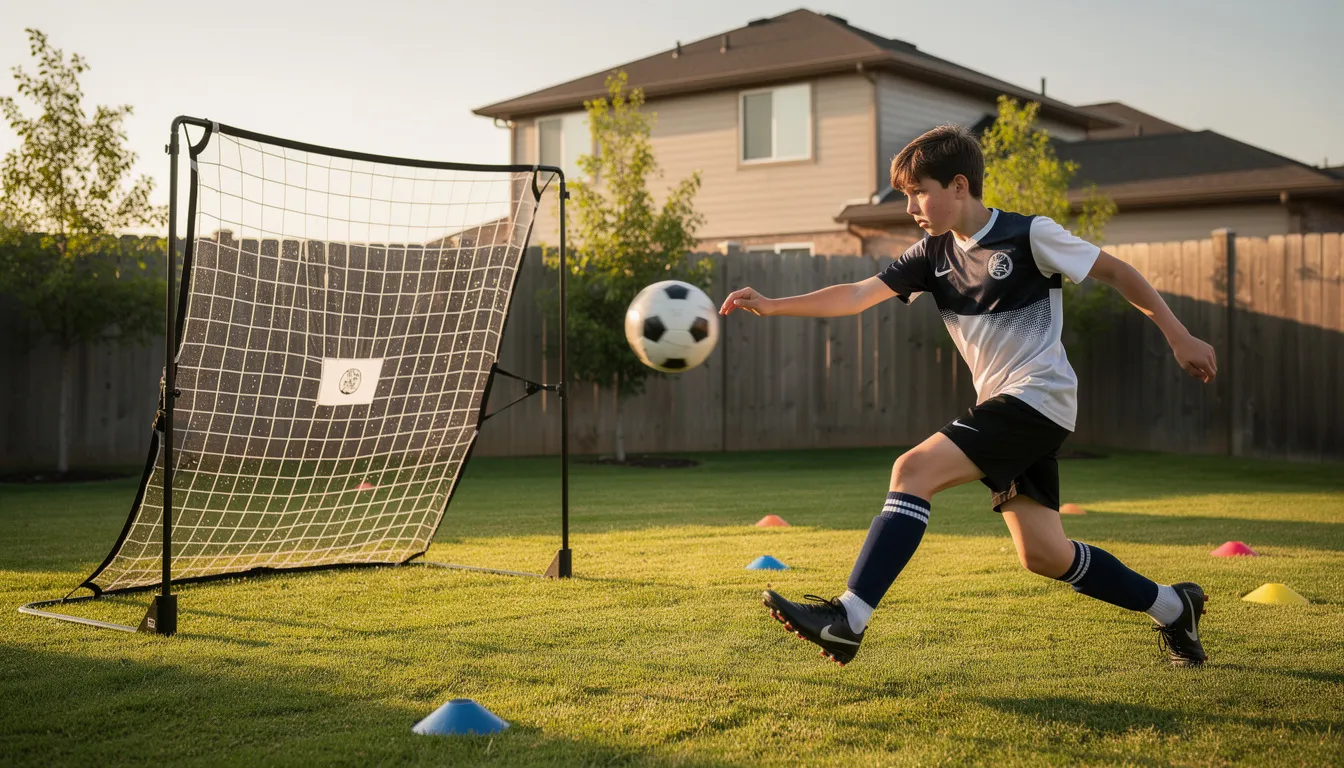
Unlike practicing against a wall, which provides unpredictable bounces and can damage equipment, rebounders are built specifically for soccer training. They simulate real game scenarios where players must quickly control incoming passes and make decisions under pressure. The ability to train alone makes rebounders particularly valuable for developing individual skills that support team performance.
Types of Soccer Rebounders
Single-sided rebounders feature adjustable angles that create varied ball trajectories, helping players practice receiving passes from different directions. The QuickPlay Replay Station represents a popular example of this category, offering portability and quick setup for home training sessions.
Double-sided rebounders provide multiple training options in one unit, allowing players to practice different skills without repositioning equipment. These models often include both flat surfaces for direct passes and angled sections for aerial ball work. Additionally, double-sided rebounders allow players to quickly reset their position or the ball during training, ensuring the flow of practice is not interrupted.
Wall rebounders and large format nets accommodate team training scenarios, enabling multiple players to practice simultaneously. These systems work well for coaches who need portable solutions for club training sessions on different fields.
This connects to the main concept because each type serves different training needs - from individual skill development to team-based drills.
Key Components and Materials
Frame construction materials range from steel and aluminum for durability to lightweight plastic for portability. Steel frames provide the greatest stability but require more storage space, while aluminum offers a balance of strength and easy transport that many coaches prefer for club use.
Net tensioning systems and spring mechanisms determine how the soccer ball returns to the player. Higher-quality rebounders use adjustable tension systems that let players customize the ball’s return speed and trajectory, making training more challenging as skills improve.
Portability features like folding frames and carrying bags enable easy transport between home, field, and storage locations. Many models can be set up quickly without tools, making them perfect for spontaneous practice sessions.
Building on these components, the performance and longevity of your rebounder depend heavily on matching the construction quality to your intended use frequency and training intensity.
Transition: Understanding these fundamental concepts helps you evaluate specific models and features when choosing equipment that matches your training goals and space requirements.
Choosing the Right Soccer Rebounder
Selecting the appropriate rebounder requires balancing training objectives, available space, skill level, and budget considerations to find equipment that will support long-term player development.
Get ready to select and purchase the right soccer rebounder by considering these criteria.
Size and Training Space Considerations
Backyard dimensions directly determine which rebound net sizes work in your available space. Most residential yards accommodate rebounders ranging from 4x4 feet to 6x8 feet, though you need additional space around the equipment for player movement during drills.
Player age groups require different rebounder sizes to maintain appropriate challenge levels. Kids benefit from larger target areas that build confidence, while older players can use smaller, more precise rebounders that demand greater accuracy.
Storage and portability needs vary significantly between permanent backyard installations and portable units for multiple training locations. Coaches who travel between fields need lightweight, quick-folding models, while home users might prefer larger, more stable options.
Skill Level, Ball Control, and Training Goals
Beginner-friendly features include larger target areas and softer ball returns that help new players develop basic ball control without frustration. These rebounders often use gentler spring tensions that give players more time to react and position themselves.
Advanced options incorporate adjustable tension and multiple angle settings that create more challenging training scenarios. Players can increase difficulty as their skills improve, making these rebounders valuable long-term investments.
Position-specific training requirements differ between goalkeepers, who need rebounders that simulate shot deflections, and field players focused on passing accuracy and first touch development. Some rebounders offer specialized configurations for different training emphases.
Budget and Brand Considerations
Entry-level models from brands like QUICKPLAY and FORZA typically range from $80-150, providing basic functionality suitable for casual home use and beginning players who need simple, reliable training tools.
Premium options with advanced features cost $200-400 but offer adjustable angles, superior materials, and enhanced portability that justify the investment for serious players and coaches requiring professional-grade equipment. Some brands also provide free shipping or complimentary warranty coverage, offering added value and cost savings for buyers.
DIY alternatives using wall surfaces and angled boards can provide similar training benefits at lower cost, though they lack the consistency and safety features of purpose-built rebounders.
Key Points:
-
Match rebounder size to available practice space and storage requirements
-
Consider skill progression needs when evaluating adjustability features
-
Balance advanced features with budget constraints for long-term value
Transition: Once you’ve selected appropriate equipment, proper setup and training techniques maximize the benefits of your soccer rebounder investment.
Setting Up and Using Your Soccer Rebounder
Effective rebounder training begins with proper assembly and positioning, followed by progressive skill development through structured practice routines that simulate real match scenarios.
After completing the assembly, make sure to receive and keep your proof of purchase. Retaining this documentation is important in case you need to make a warranty claim or request support in the future.
Step-by-Step: Rebounder Assembly and Positioning
When to use this: Initial setup for new rebounder owners and periodic relocation for optimal training conditions.
-
Unpack components: Identify frame pieces, nets, springs, and hardware, checking against the instruction manual to ensure all parts are present before beginning assembly.
-
Assemble frame: Connect frame sections following manufacturer instructions, ensuring all joints lock securely and the structure remains stable during use.
-
Attach net with proper tension: Install the rebound net using appropriate tension for desired ball return speed, testing with gentle kicks before full training sessions.
-
Position on level ground: Place the assembled rebounder on flat, stable ground with adequate surrounding space for player movement and ball retrieval.

Comparison: Single-Sided vs Double-Sided Rebounders
|
Feature |
Single-Sided |
Double-Sided |
|---|---|---|
|
Training Versatility |
Focused passing drills, adjustable angles |
Multiple training angles, varied skill practice |
|
Space Requirements |
8x10 feet minimum area |
12x15 feet recommended area |
|
Price Range |
$100-200 for quality models |
$250-400 for premium options |
|
Best For |
Individual skill development |
Multiple players, diverse training |
Single-sided rebounders excel for dedicated passing practice and work well in smaller backyards, while double-sided models offer greater training variety but require more space and investment.
Transition: Even well-chosen and properly set up rebounders can present challenges that understanding common issues helps you address quickly.
Common Challenges and Solutions
Successful rebounder training requires understanding typical problems that arise during regular use and implementing preventive maintenance strategies to ensure consistent performance.
Challenge 1: Inconsistent Ball Return Angles
Solution: Check net tension and adjust springs or elastic cords to ensure even distribution across the rebound surface.
Frame stability and ground surface conditions significantly impact ball return consistency, so verify that legs remain firmly positioned and consider using stakes on soft ground.
Challenge 2: Net Wear and Tear
Solution: Rotate impact zones regularly by adjusting player position and inspect nets frequently for fraying or weak points that require attention.
Preventive maintenance includes cleaning debris from nets after outdoor sessions and replacing worn components before they fail during training.
Challenge 3: Weather Damage and Storage
Solution: Use weatherproof covers when leaving rebounders outdoors and store equipment indoors when possible, particularly plastic frame models vulnerable to UV damage.
Climate considerations include protecting metal components from rust in humid conditions and understanding warranty coverage for outdoor exposure damage.
Transition: Addressing these common issues ensures your rebounder provides reliable training support that helps develop the soccer skills essential for improved game performance.
Conclusion and Next Steps
Soccer rebounders offer an effective, convenient way to develop essential skills like ball control, passing accuracy, and reaction speed through consistent solo practice that complements team training. The right rebound net becomes a valuable training partner that helps players of all ages improve their first touch and build confidence with the ball at their feet.
To get started:
-
Measure your available space and define specific training goals to guide your selection process
-
Research models within your budget range by reading user reviews on Amazon and comparing features across different brands
-
Begin with basic passing drills and gradually progress to more challenging techniques as your skills and confidence improve
Related Topics: Soccer training cones for agility work, skill development programs that integrate rebounder training, and additional tools that create comprehensive home training setups.
Additional Resources
Consider exploring complementary training equipment like agility ladders and soccer training cones that work alongside rebounders to create well-rounded practice sessions. Many coaches recommend combining rebounder training with video analysis to help players understand proper technique and track improvement over time.